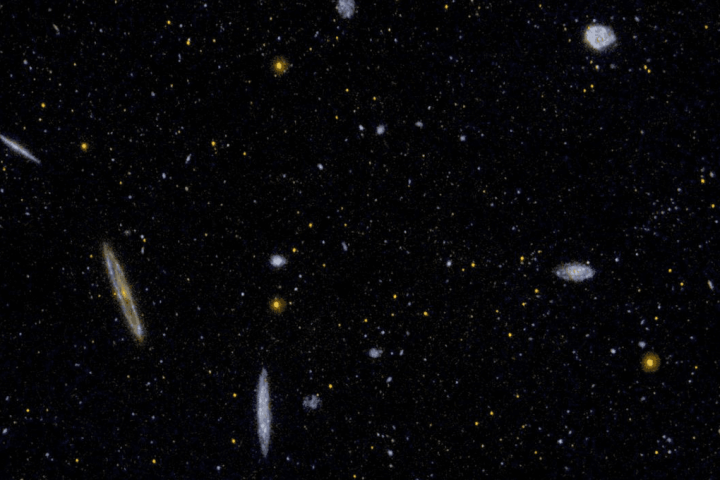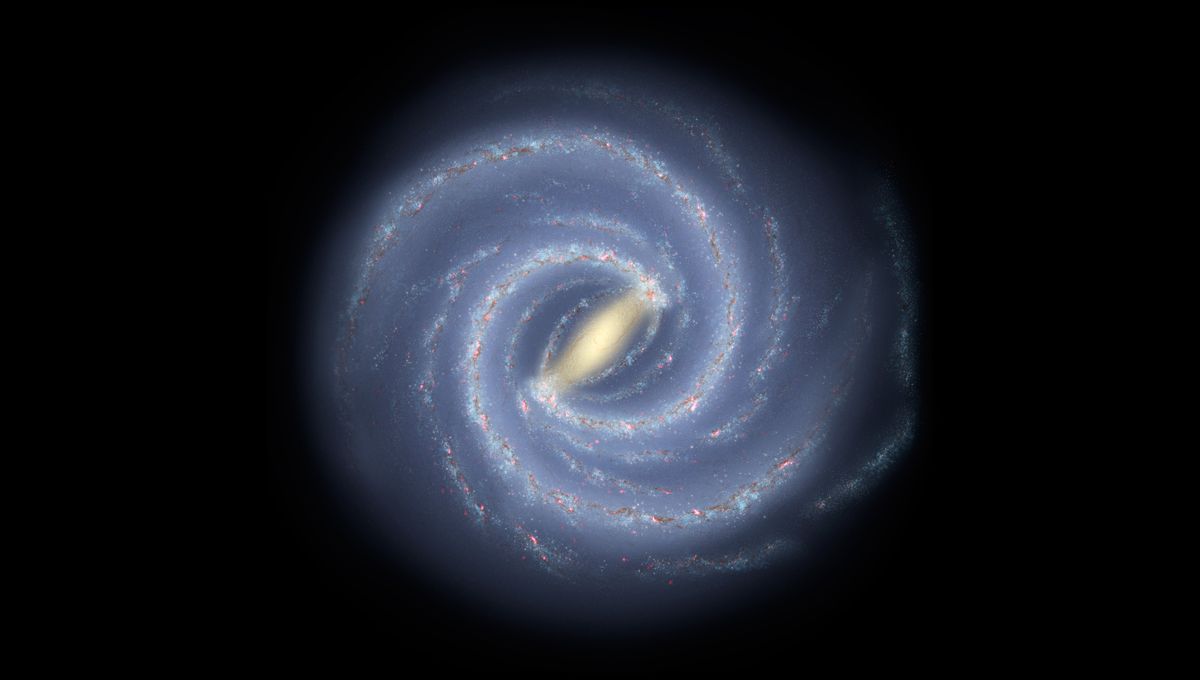
Prepare to be amazed by the wonders of our galaxy, the Milky Way! Picture a swirling spiral of billions of stars, stretching out in magnificent arms. But did you know that our galaxy is not like other spirals? It has a unique feature at its core – a dense block shaped like a sausage, from which the spiral arms gracefully extend. Take, for example, the Whirlpool Galaxy, with its spherical core. Fascinating, isn’t it?
Now, let’s dive into the captivating story of galaxy formation. Initially, galaxies are a chaotic mess, a result of gas falling onto them from intergalactic space and collisions with other galaxies. But over time, they grow and evolve, eventually settling into either disk or spherical shapes. The disk is where the spiral arms reside, while at the core of the disk, older stars gather in bulge or bar formations. It was believed that barred spiral galaxies like the Milky Way couldn’t be seen until the universe was at least half its current age, a staggering 13.8 billion years. However, recent discoveries have shown that this process occurs much faster than anticipated.
Now, let’s talk about a remarkable discovery – the galaxy known as ceers-2112. This galaxy formed shortly after the Big Bang, defying our expectations. Dr. Alexander de la Vega, a co-author from the University of California, explains, “Finding ceers-2112 shows that galaxies in the early universe could be as ordered as the Milky Way. This is surprising because galaxies were much more chaotic in the early universe, and very few had similar structures to the Milky Way.”
Hold on to your seats because here’s the mind-blowing part. Ceers-2112 suggests that galaxies don’t need billions of years to become well-behaved spiral galaxies. In just 400 million years, the bar in ceers-2112 formed, and the disk of stars settled into place over 12 billion years ago. This galaxy is the closest progenitor to the Milky Way discovered within the first 4 billion years of the universe. Its discovery will revolutionize both theories and observations, thanks to the groundbreaking work of the JWST.
So, what does this mean for our understanding of galaxy formation and evolution? Dr. de la Vega explains, “First, theoretical models will need to account for galaxies becoming stable enough to host bars very early in the universe’s history. These models may need to adjust the amount of dark matter believed to affect the rate at which bars form. Second, the discovery of ceers-2112 demonstrates that structures like bars can be detected in the very young universe. This is significant because galaxies in the distant past were smaller, making it harder to find bars. The discovery of ceers-2112 opens the door to uncovering more bars in the young universe.”