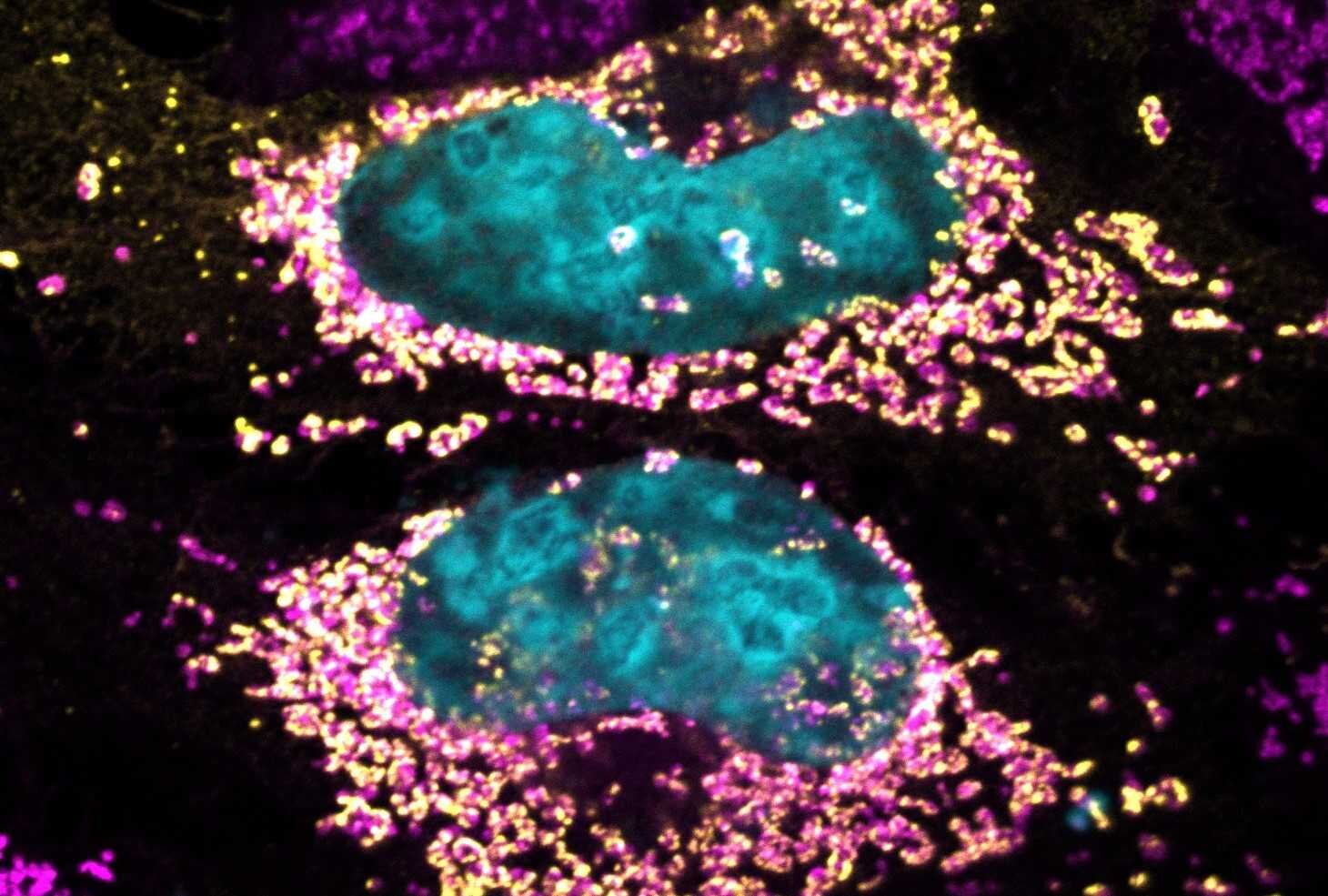
Researchers at the University of São Paulo (USP) in Brazil, in collaboration with colleagues in Australia, have made a groundbreaking discovery. They have identified a unique bacterial protein that has the ability to keep human cells healthy, even when they are heavily burdened with bacteria. This finding has the potential to revolutionize the treatment of various diseases related to mitochondrial dysfunction, including cancer and auto-immune disorders. Mitochondria are essential organelles that provide the energy needed for cells to function properly.
The study, published in the journal PNAS, involved the analysis of over 130 proteins released by Coxiella burnetii, a bacterium that invades host cells. The researchers discovered a previously unknown protein, which they named mitochondrial coxiella effector F (MceF), that can prolong cell longevity by directly interacting with glutathione peroxidase 4 (GPX4), an antioxidant enzyme located in the mitochondria. This interaction improves mitochondrial function by promoting an anti-oxidizing effect, preventing cell damage and death that can occur when pathogens replicate inside mammalian cells.
Dario Zamboni, one of the corresponding authors of the study and a professor at the Ribeirão Preto Medical School (FMRP-USP), explained, “C. burnetii uses various strategies to prevent the death of invaded cells and multiply inside them. One of these strategies is the modulation of GPX4 by MceF, which we discovered and reported in this article. By reallocating these proteins in cellular mitochondria, mammalian cells can live longer even when infected with a large bacterial burden.”
C. burnetii is the causative agent of Q fever, a serious infection that affects both humans and animals. The bacterium is highly adapted to invade and control macrophages and monocytes, inhibiting the host’s immune response. Zamboni described C. burnetii as a “brilliant cell biologist” due to its ability to modulate cell functions and cause disease even with a small number of bacteria. Studying this bacterium provides valuable insights into cell functioning, mitochondrial dysfunction, and programmed cell death in humans.
To investigate the bacterium’s ability to subvert macrophages and directly affect mitochondria, the researchers conducted in vitro assays and experiments using larvae of the Greater wax moth. They focused on MceF because of its direct impact on mitochondria, which play a crucial role in the process of cell death.
Moving forward, the researchers plan to further explore other proteins of interest and conduct biochemical studies to gain a deeper understanding of how MceF influences GPX4. Zamboni emphasized the significance of this research, stating, “By studying this bacterium, we are not only learning about cell signaling, cell death, and reversing mitochondrial dysfunction, but we are also uncovering novel ways to treat these conditions. We don’t need to invent new techniques; the bacterium’s interaction with host cells already provides us with valuable insights.”
This groundbreaking research has the potential to pave the way for new treatments and interventions in the field of mitochondrial dysfunction, offering hope for patients suffering from a wide range of diseases.