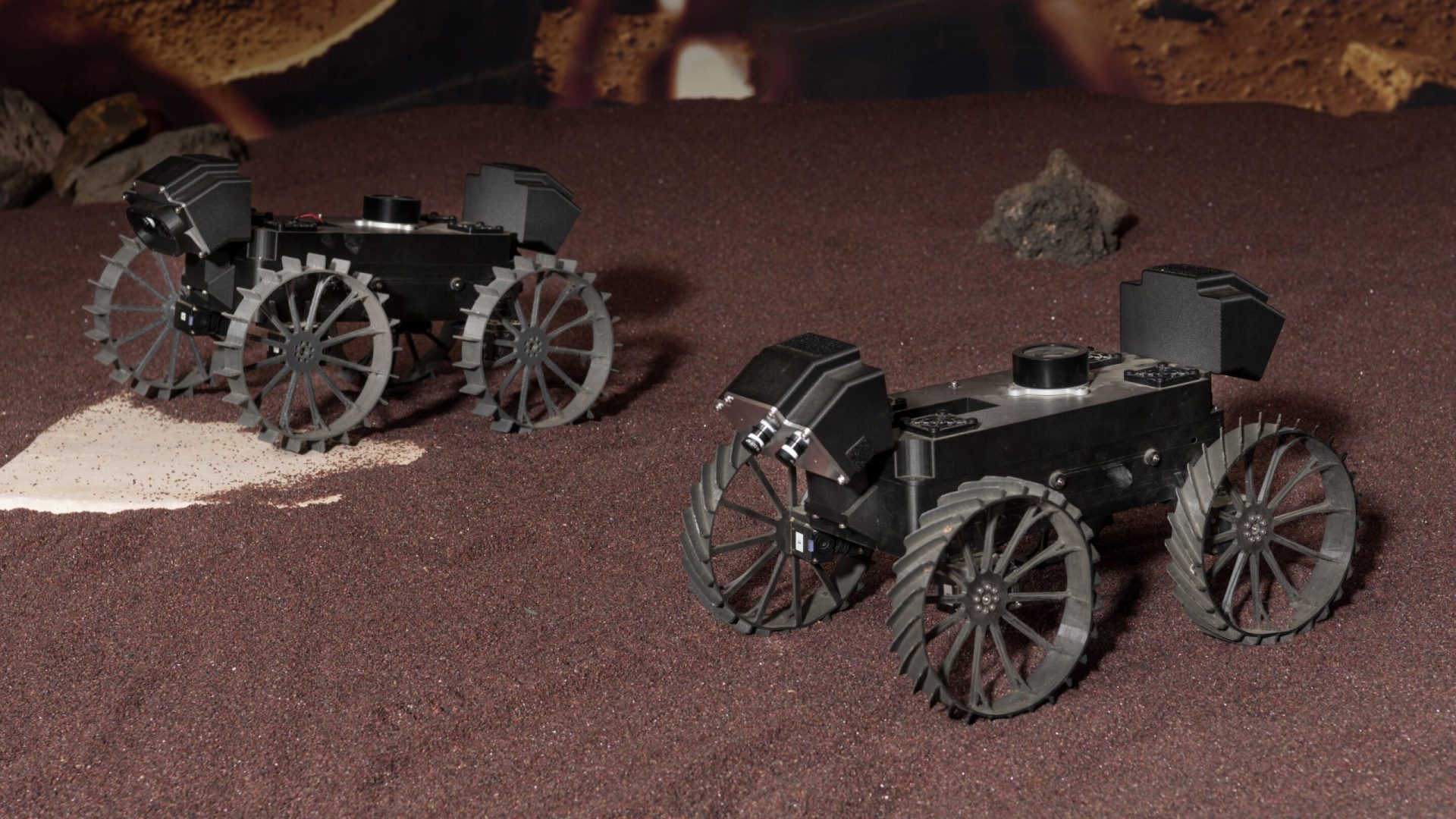
Get ready for an exciting lunar mission! NASA is sending three rovers, each the size of a carry-on bag, to explore the moon in a groundbreaking experiment. These autonomous robots will work together to map the lunar surface in 3D using cameras and ground-penetrating radar.
NASA’s CADRE (Cooperative Autonomous Distributed Robotic Exploration) project aims to demonstrate the potential of autonomous robots in future missions. These small rovers will arrive on the moon in 2024 as part of NASA’s CLPS initiative. Once there, they will conduct experiments to test their capabilities over a full lunar day, which is about 14 Earth days.
The goal of the CADRE project is to show that a network of mobile robots can work together without human intervention. By taking simultaneous measurements from multiple locations, these rovers could enable new scientific discoveries and support future astronauts. The question for future missions will be: how many rovers do we send, and what can they accomplish together?
These rovers will face a series of tests to showcase their teamwork and autonomy. They will drive in formation, maintain their relative positions using ultra-wideband radios, and avoid obstacles using sensors. Additionally, they will explore designated areas individually, creating a topographic 3D map with stereo cameras. The rovers will also demonstrate their adaptability if one of them stops working.
But that’s not all! The rovers will also carry ground-penetrating radars to gather data about the moon’s subsurface structure. By working together and sharing radio signals, they can create a detailed 3D image up to 33 feet below the surface. This collaborative approach could revolutionize scientific exploration.
Surviving the harsh lunar environment is another challenge for these small robots. With temperatures reaching up to 237°F (114°C), they need to be robust and lightweight. To manage the heat, the rovers will undergo 30-minute wake-sleep cycles, cooling off and recharging their batteries. They will communicate with each other through a mesh radio network and elect a leader based on fitness for the task at hand.