Did you know that shales in sedimentary basins are natural nanopore media that play a crucial role in the formation and development of natural gas and special gases like helium?
Understanding how gases behave in mud shale nanopores can unlock the secrets of helium-rich natural gas enrichment and reservoir formation. This knowledge is invaluable for the exploration and development of shale gas.
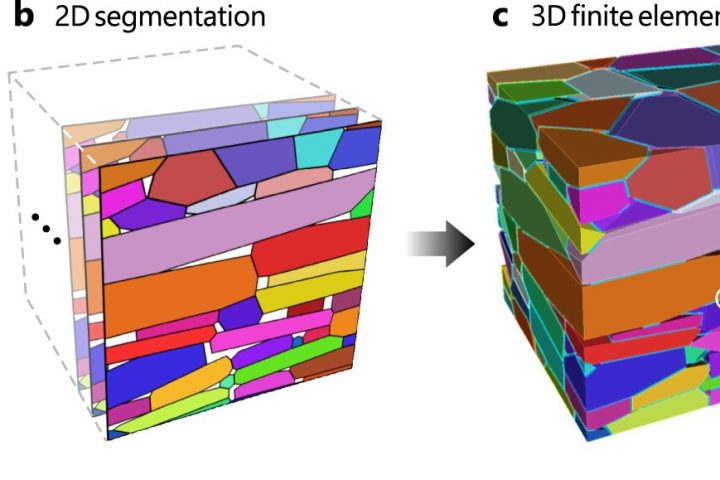
A team of researchers, led by Prof. Zhou Shixin from the Northwest Institute of Eco-Environmental and Resources of the Chinese Academy of Sciences (CAS), has conducted a comprehensive study comparing the transport behaviors of helium, nitrogen, methane, and helium-methane mixtures in shale nanochannels. Their findings were published in the Chemical Engineering Journal on July 21.
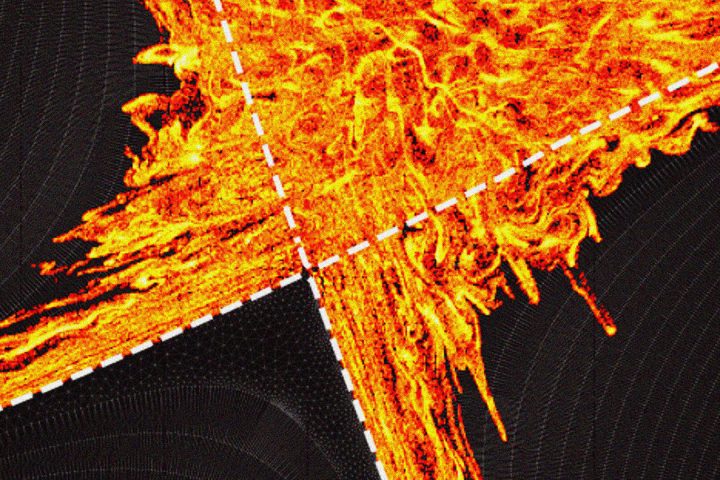
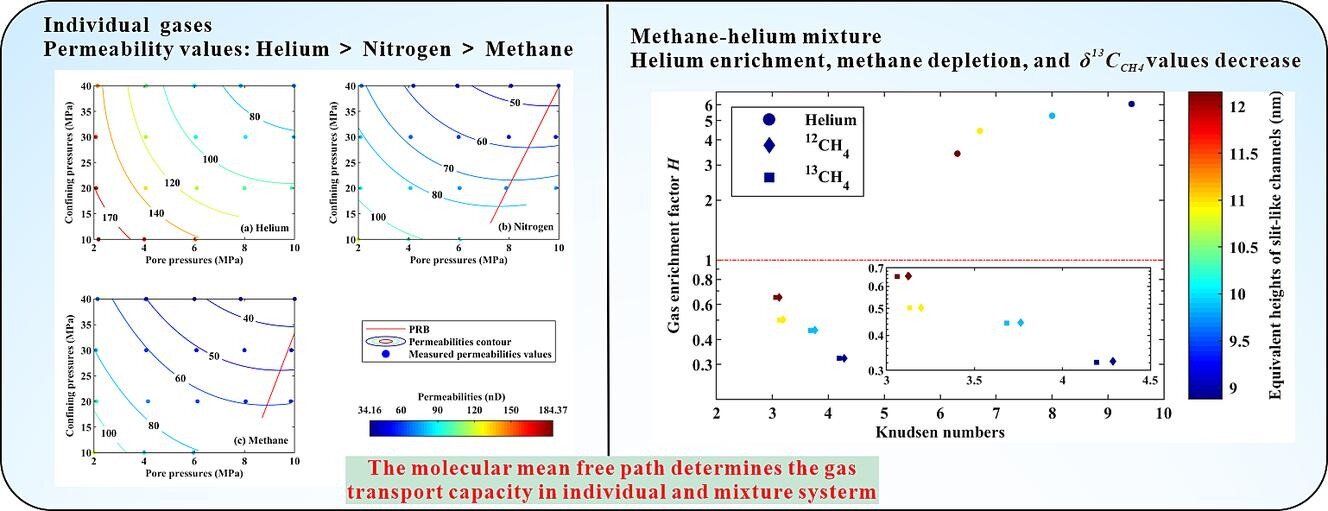
The study revealed that helium has a higher apparent permeability than nitrogen and methane, especially at low pore pressures. Methane’s permeability is influenced by adsorption effects, which both reduce its transport capacity and alter the surface roughness of the channels, affecting momentum transfer effectiveness.
In the case of a methane-helium mixture, helium is preferred for transport over methane. Additionally, 12CH4 is chosen over 13CH4, with the difference in transport capacity controlled by the mean molecular free range and Knudsen numbers of the components in the mixed system.
Furthermore, the researchers discovered that the preferential transport of helium over methane in helium-bearing natural gas, driven by pressure gradients in shale nanochannels, is a critical factor in the formation of helium-rich natural gas reservoirs. These reservoirs are likely to occur in secondary low-pressure reservoirs of the basin, which is often overlooked in conventional natural gas exploration and development processes.