Duct tape found at crime scenes can provide forensic scientists with important information, but no standardized protocol for analyzing it has ever existed.
Now, Tatiana Trejos, assistant professor in the West Virginia University Department of Forensic and Investigative Science, and graduate student Meghan Prusinowski have developed a groundbreaking method that can help piece together a crime scene by literally piecing the evidence together. Or not.
Their method provides a systematic approach for comparing pieces of trace evidence that appear to be from the same source. Prusinowski recently published the findings in Forensic Chemistry, with contributions from Aldo Romero, Eberly Distinguished Professor of Physics and Astronomy, and statistician Cedric Neuman from Battelle Memorial Institute.
Trace evidence, usually invisible to the naked eye, is likely to be transferred at a crime scene. This evidence can include fibers, glass, or paint polymers resulting from contact between individuals or objects.
“Duct tapes, in particular, are often used to gag victims,” Trejos explained. “So, when we find traces left behind, they can tell us about who was there, who tore it apart, and more.”
When forensic scientists separate duct tape, they can leave behind fingerprints or DNA from the suspect or victim. However, if gloves were used, there may be no fingerprints or DNA present. Nevertheless, when duct tape is torn into pieces, it leaves “fracture edges” that can be evaluated and examined for a physical fit.
“A physical fit means putting the two fracture edges together and demonstrating that they have enough individual characteristics to indicate that they were once together,” Trejos explained.
In forensic science, evidence like DNA and fingerprints is highly unlikely to have come from a source other than the one indicated. Physical fit has a similarly high level of association due to the random nature of the edge features left in the fracture edges.
“It is very unlikely that we can reproduce all the microscopic features of a torn edge,” Trejos said. “We have torn apart thousands and thousands of pieces, and we have demonstrated that it’s highly unlikely for there to be a perfect fit in pieces that were not once together.”
Trejos’s research provides a scientific basis to evaluate error rates in physical fit examinations, considering the probability of a random physical fit match, performance rates, error rates, and influencing factors. This will help the forensic community establish standards that can be used worldwide.
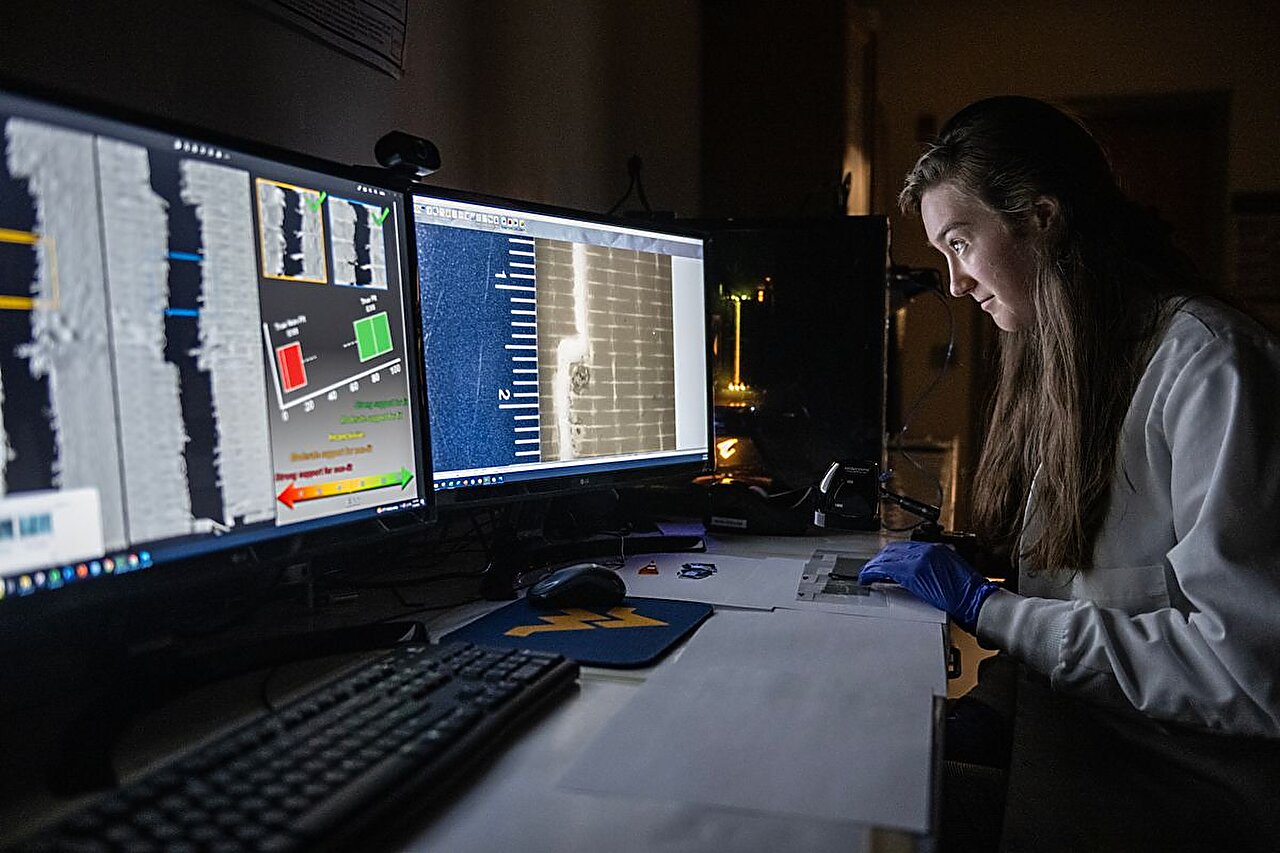
Trejos’s method allows examiners to qualify and quantify features observed during physical fit examinations. Examiners follow specific criteria to provide a score metric of how similar the tape edges are, estimate probabilities, and systematically document the features of the physical fit using an Excel template.
The report is not solely based on Trejos’s opinion. It undergoes separate and independent review by a second examiner who follows the same protocol and documentation templates. Any disagreements are transparently discussed and defended in the courtroom.
Using this method, Trejos and her students found an extremely low error rate in duct tape physical fit examinations. The next step is to teach forensic examiners how to follow the method.
The team has conducted interlaboratory studies to test the method with experienced practitioners involved in physical fit examinations. These guidelines will also help researchers focus on pattern recognition in other trace evidence materials.
Trejos expects to see these methods adopted in forensic laboratories within a few years, providing the scientific foundation established by the WVU team to other labs.
“They’ll have all the resources they need to present evidence in court,” Trejos said. “Because that can make the difference between sending an innocent person to jail or not.”