Get ready for groundbreaking discoveries! A new study led by a team of international researchers from UCL suggests that observations of gravitational waves from merging black holes could unlock the secrets of dark matter.
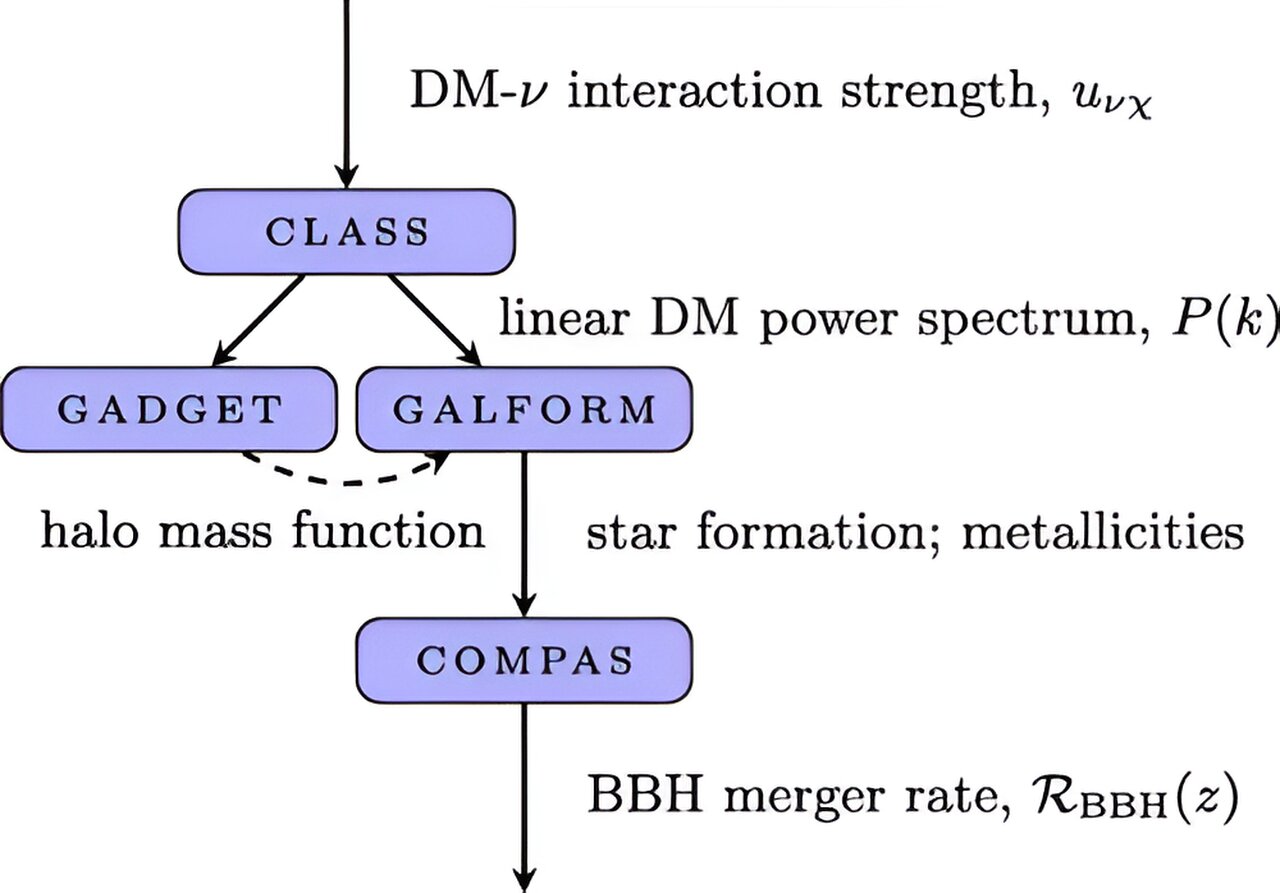
Prepare to have your mind blown! This study, presented at the 2023 National Astronomy Meeting in Cardiff and now published in the journal Physical Review D, used computer simulations to explore the production of gravitational wave signals in simulated universes with different types of dark matter.
What did they find? Well, they discovered that by counting the number of black-hole merging events detected by the next generation of observatories, we can gain insights into whether or not dark matter interacts with other particles. This could help us finally unravel the mystery of what dark matter is made of.
Dark matter has always been a puzzle for cosmologists. Despite overwhelming evidence that it constitutes a whopping 85% of all matter in the universe, we still don’t fully understand its nature. Does it collide with other particles like atoms or neutrinos? Or does it simply pass through them without any interaction?
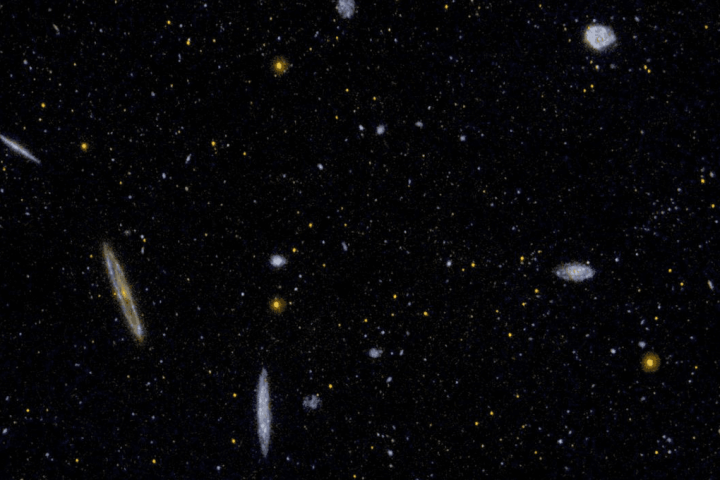
One way to investigate this is by studying how galaxies form in dense clouds of dark matter known as haloes. If dark matter collides with neutrinos, it disrupts the dark matter structure, resulting in fewer galaxies being formed.
However, there’s a catch. The missing galaxies are incredibly small and distant, making it incredibly challenging to observe them even with the most advanced telescopes available.
But fear not! The authors of this study have come up with a brilliant solution. Instead of directly targeting the missing galaxies, they propose using gravitational waves as an indirect measure of their abundance. Their simulations demonstrate that in models where dark matter collides with other particles, there are significantly fewer black-hole mergers in the distant universe.
Although this effect is currently too minuscule to be detected by current gravitational wave experiments, it will be a primary focus for the next generation of observatories that are currently in the works.
The authors are optimistic that their innovative approach will inspire new ideas for utilizing gravitational wave data to explore the vast structure of the universe and shed light on the enigmatic nature of dark matter.
Dr. Alex Jenkins (UCL Physics & Astronomy), one of the lead authors of the study, expressed his excitement, stating, “Gravitational waves are a powerful new tool for observing the distant universe. The next generation of observatories will detect hundreds of thousands of black-hole mergers every year, giving us unprecedented insights into the structure and evolution of the cosmos.”
Co-author Dr. Sownak Bose of Durham University added, “Dark matter remains one of the enduring mysteries in our understanding of the universe. That’s why it’s crucial to continue identifying new ways to explore different models of dark matter. By combining existing and new probes, gravitational-wave astronomy offers a pathway to better comprehend not only dark matter but also the formation and evolution of galaxies as a whole.”