Polycarbonate (PC) is an engineering plastic known for its high transparency and impact resistance. It is used in various applications such as eyeglass lenses, camera lenses, DVDs, automobile headlights, and bulletproof glass.
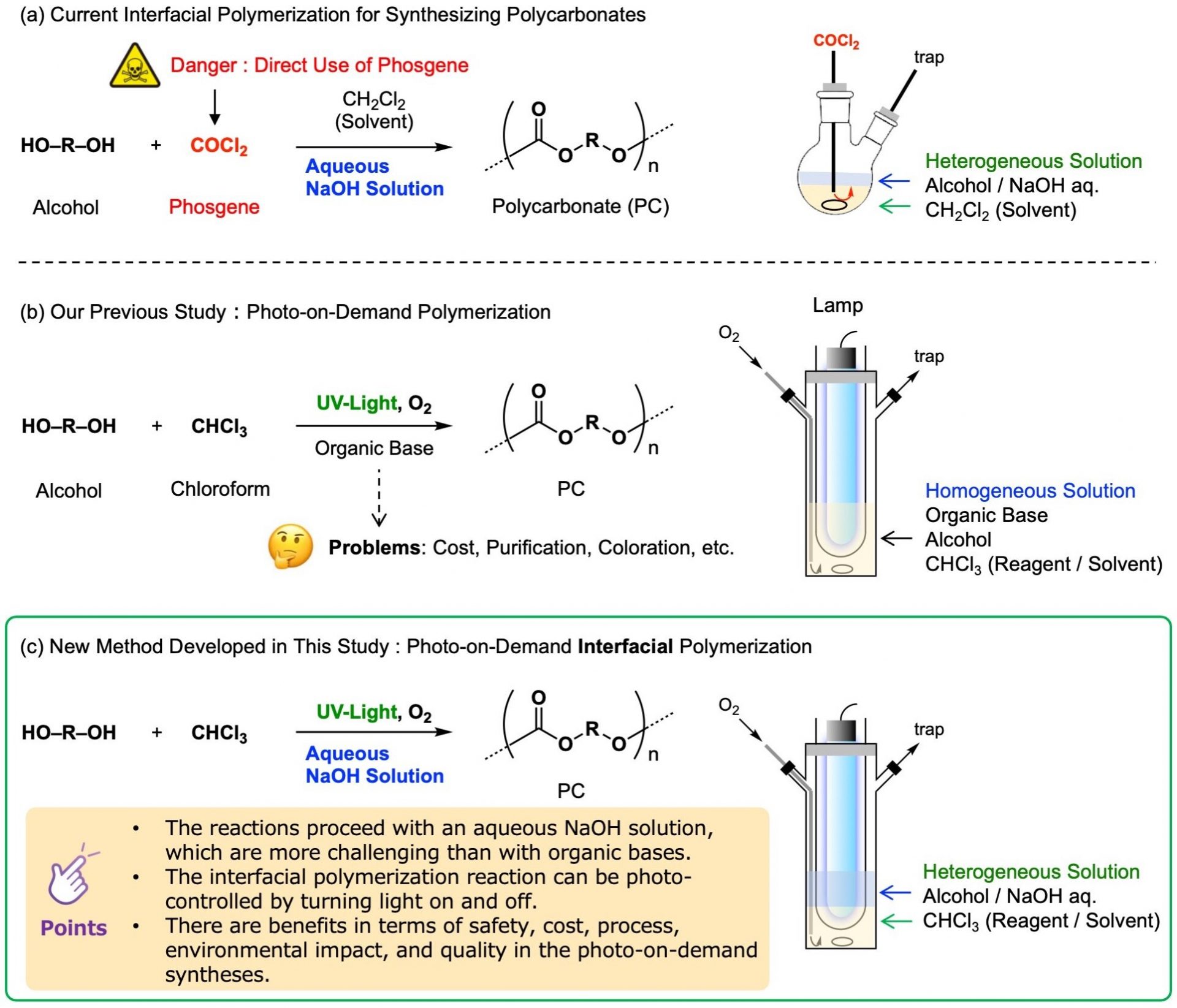
The traditional method of producing polycarbonate involves using highly toxic phosgene. However, researchers at Kobe University Graduate School of Science have developed a new, safer synthesis method using a photo-on-demand organic synthesis technique. By shining ultraviolet light on a mixed solution of aqueous sodium hydroxide, chloroform, and alcohol, they were able to obtain polycarbonate with high yield. This method is suitable for small-scale synthesis of various carbonate products.
The research team has obtained patents for this synthesis method in multiple countries and published their findings in ACS Omega. By eliminating the need for direct handling of phosgene, this method offers a safer and more environmentally friendly approach to polycarbonate production.
In addition to polycarbonate, the team also successfully synthesized various types of carbonates and urea derivatives using this method. This breakthrough could contribute to the development of a carbon-neutral and sustainable society with reduced CO2 emissions and energy consumption.
Phosgene, the raw material used in the traditional production of polycarbonate, is highly toxic. The worldwide phosgene market continues to grow, but there is a need for safer alternatives. The research team discovered that ultraviolet light can trigger the photochemical oxidation of chloroform to produce phosgene efficiently. This photo-on-demand organic synthesis method offers a safer and more economical approach to chemical synthesis.
Compared to the conventional method, which directly handles phosgene, the photo-on-demand method has several advantages, including improved safety, cost reduction, and product quality. The research team continues to explore the potential applications of this method in various chemical reactions.
The development of this new photo-on-demand interfacial reaction opens up possibilities for safe and practical synthesis of polycarbonate and other organic chemicals. By avoiding direct contact with dangerous substances, this method offers a promising solution for the production of high-quality and environmentally friendly materials.