A groundbreaking new study has provided conclusive evidence for the breakdown of standard gravity in the low acceleration limit. By analyzing the orbital motions of long-period, widely separated binary stars, known as wide binaries, researchers have uncovered verifiable proof of this phenomenon. This study, conducted by Kyu-Hyun Chae, a professor of physics and astronomy at Sejong University in Seoul, utilized data from the European Space Agency’s Gaia space telescope, observing up to 26,500 wide binaries within 650 light years. Published in the Astrophysical Journal on August 1, 2023, this research marks a significant advancement in our understanding of gravity.
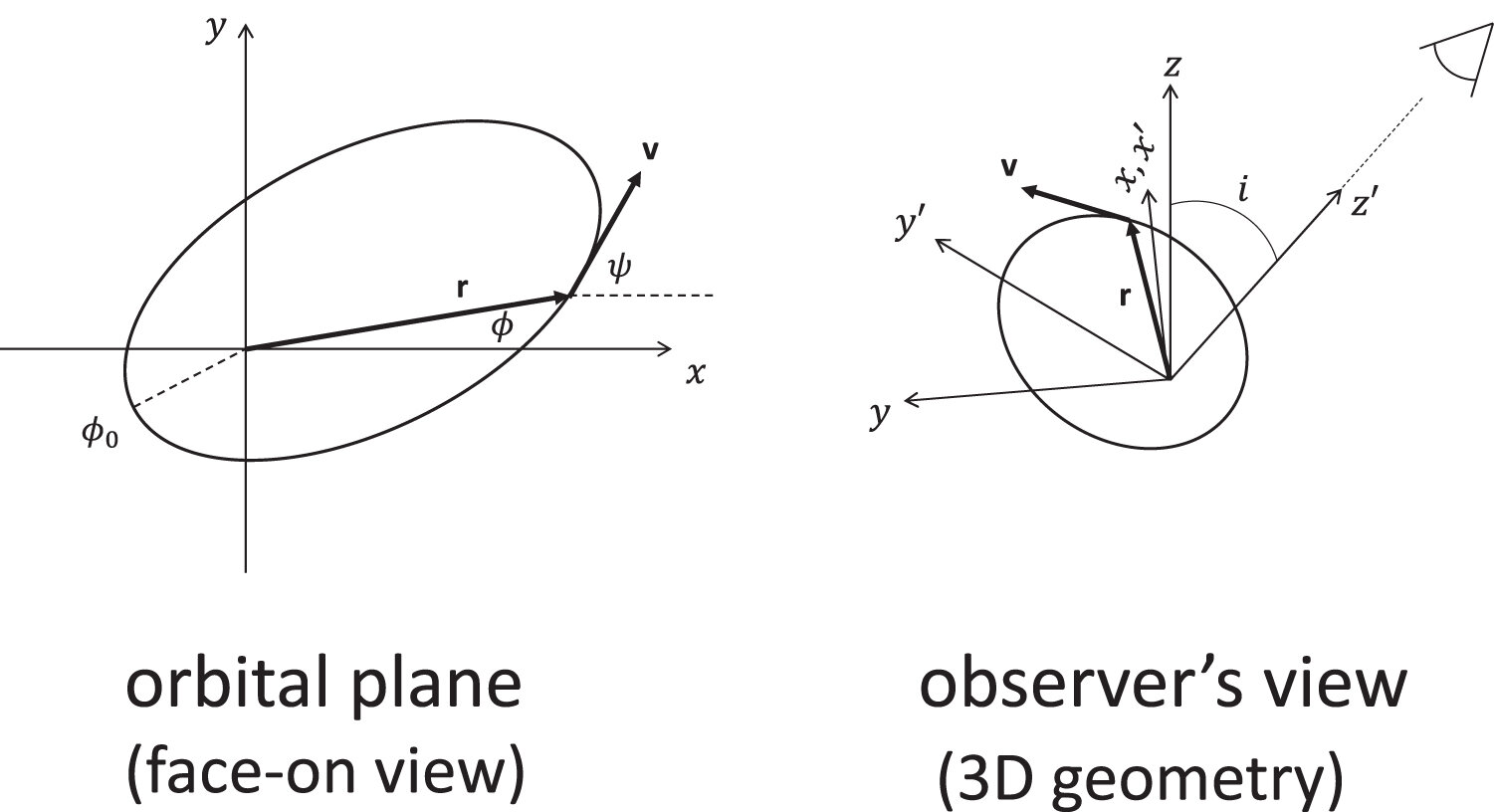
Chae’s study stands out from previous research in several ways. Firstly, it focused on calculating gravitational accelerations experienced by binary stars as a function of their separation or orbital period. This approach involved a Monte Carlo deprojection of observed sky-projected motions to the three-dimensional space, providing a more accurate analysis. Chae explains, “Calculating accelerations is the most direct and efficient way to test gravity since the gravitational field itself is an acceleration. My previous research on galactic rotation curves led me to this idea. Wide binaries and galactic disks share some similarities in their orbits, despite their differences in shape.”
In addition, Chae calibrated the occurrence rate of hidden nested inner binaries at a benchmark acceleration, further enhancing the accuracy of the study. The results revealed that when two stars orbit each other with accelerations lower than about one nanometer per second squared, they deviate from the predictions of Newton’s universal law of gravitation and Einstein’s general relativity. For accelerations lower than about 0.1 nanometer per second squared, the observed acceleration is approximately 30 to 40% higher than predicted. These deviations are highly significant, meeting the conventional criteria of 5 sigma for a scientific discovery.
Interestingly, the observed accelerations stronger than about 10 nanometers per second squared align with the Newton-Einstein prediction. However, the boost of accelerations at lower accelerations remains a mystery. This breakdown of the Newton-Einstein theory at weak accelerations was first suggested 40 years ago by theoretical physicist Mordehai Milgrom at the Weizmann Institute in Israel. Milgrom proposed a new theoretical framework called modified Newtonian dynamics (MOND), which accurately predicts the observed boost factor of about 1.4.
Chae’s findings have significant implications for astrophysics, theoretical physics, and cosmology. They challenge the current understanding of gravity and the concepts of dark matter and dark energy. The breakdown of standard gravity in the weak acceleration limit, as demonstrated by wide binary dynamics, necessitates the development of a new theory that extends general relativity to the MOND limit. This discovery may lead to a new revolution in physics, with far-reaching implications for our understanding of the universe.
Confirmation of these findings by independent analyses, preferably with better future data, is crucial. However, the robustness of Chae’s results, supported by the unprecedented accuracy of the Gaia satellite and meticulous analysis, qualifies them as a significant discovery. Xavier Hernandez, a professor at UNAM in Mexico, who first proposed wide binary tests of gravity, expresses excitement about the confirmation of the departure from Newtonian gravity and its accurate correspondence to a detailed MOND model. Pavel Kroupa, a professor at Bonn University and Charles University in Prague, also agrees with the conclusions, emphasizing the immense implications for astrophysics as a whole.