The concept of turning an asteroid into a rotating space habitat has always been intriguing but has often been dismissed as a distant possibility. However, for retired individuals with a passion for space exploration, developing a detailed plan for transforming an asteroid into a habitat seems like a fascinating endeavor.
And that’s exactly what David W. Jensen, a retired Technical Fellow at Rockwell Collins, recently did. He published a 65-page paper on the arXiv preprint server, outlining an easy-to-understand, cost-effective, and feasible plan for converting an asteroid into a space habitat.
While delving into the intricacies of the report is beyond the scope of this article, let’s explore the key highlights. Dr. Jensen divides the discussion into three main categories: asteroid selection, habitat style selection, and mission strategy. Let’s examine each of these aspects.
Asteroid selection involves identifying the most suitable candidate for transforming into a rotating space habitat. Factors considered include the asteroid’s composition, proximity to Earth, and size.
After a thorough selection process, Dr. Jensen settled on Atira, an S-type asteroid with a diameter of approximately 4.8 km. Atira even has its own moon, making it an intriguing choice. Although not the closest asteroid, its stable orbit within the “Goldilocks zone” of our solar system would help maintain a stable internal temperature for the future habitat.
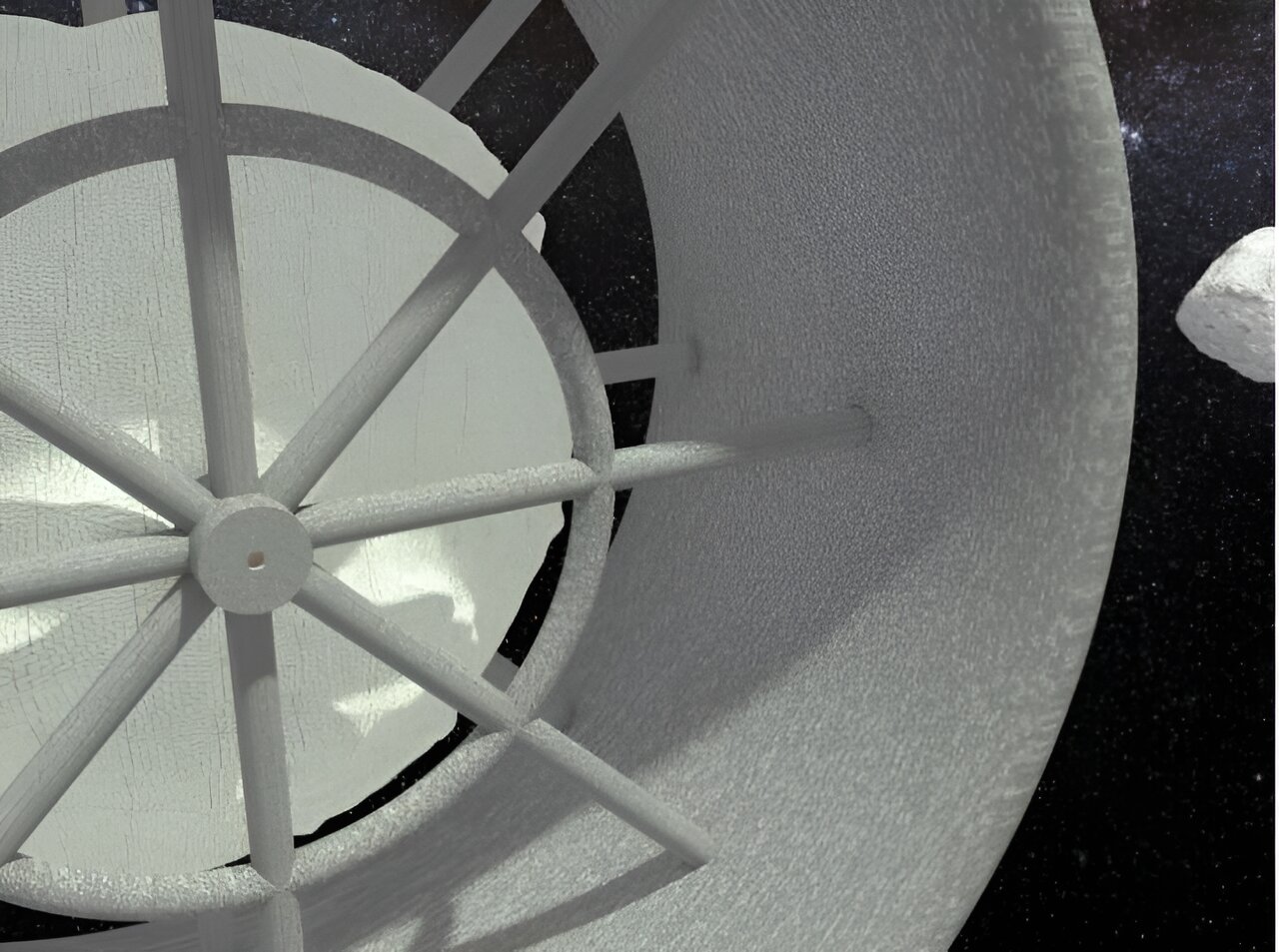
Next, Dr. Jensen explores different habitat styles, including the “dumbbell,” sphere, cylinder, and torus. One crucial consideration is the creation of artificial gravity through centripetal force, as prolonged exposure to low gravity can have detrimental effects on human health.
To generate centripetal force, the station would need to rotate. While Atira already has a slight rotation, part of the habitat conversion process would involve increasing its rotational speed to accurately simulate Earth’s gravity.
Dr. Jensen also addresses various other factors in selecting a specific type of station, such as the forces exerted on the structural material, radiation and micrometeorite protection, and the amount of living space required.
For increased living space, he suggests incorporating multiple floors into the structure. Additionally, he determines a torus to be the ideal habitat type and provides calculations for station mass, inner wall support, and floor allocation.
So, how would such a colossal structure be built? Dr. Jensen proposes the use of self-replicating robots. The report’s third section outlines a plan involving spider robots and a base station capable of replication. The idea is to send advanced technical components from Earth and utilize asteroid resources for constructing everything else, from rock grinders to solar panels. While it may sound like science fiction, the concept appears theoretically coherent.
Let’s examine some impressive numbers. Dr. Jensen suggests that a “seed” capsule containing four spider robots, the base station, and advanced electronics for building 3,000 more spider robots could weigh as little as 8.6 metric tons. Once the capsule reaches the asteroid, it would require no further input from Earth.
Now, onto the cost and timeline. With rough calculations, Dr. Jensen estimates that the entire program would cost only $4.1 billion, significantly less than NASA’s projected $93 billion expenditure for the Apollo program. The result would be a space habitat providing 1 billion square meters of new land. That’s