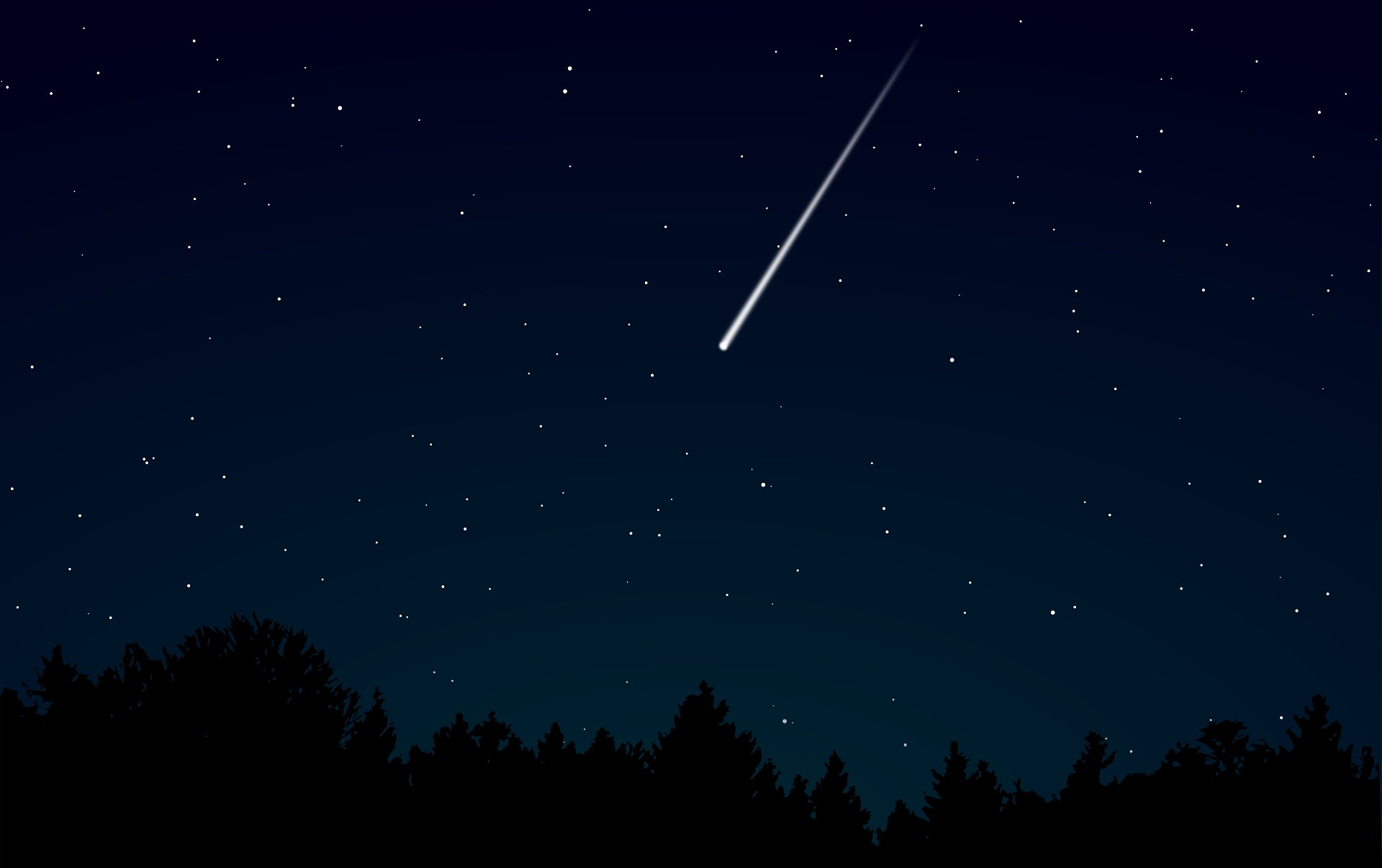
The first hours after a fireball sighting are like a thrilling detective mystery. Last night, around midnight, people across Melbourne took to social media to report sightings of a mesmerizing bright light slowly streaking across the sky.
Video footage clearly shows the fireball breaking apart, with these fragments in turn burning up, indicating that this object was quite large.
An unexpected piece of space junk
Reports of a loud explosion have been pouring in from across Victoria. Known as sonic booms, such sounds imply that the pieces survived long enough to enter the lower atmosphere—otherwise, they wouldn’t be audible from the ground. This suggests that at least a part of this fireball was dense.
Additionally, the glow of the fireball exhibited discernible colors, particularly orange, in some videos. This tells us that the object isn’t a space rock, but rather human-made, with a significant amount of plastics or metals burning up (similar to burning materials in a Bunsen burner during high school chemistry class).
So, it’s highly likely that we just witnessed several tons of space junk—anything humans have put into orbit that is no longer under our control—re-entering Earth’s atmosphere. However, nothing was predicted for reentry on the global space debris tracking site SatView.
According to an early analysis by US-based astronomer Jonathan McDowell, the fireball may have been the third stage of a Soyuz 2 rocket carrying the navigation satellite GLONASS-K2. This rocket was launched by Roscosmos (the Russian space agency) on August 7 from the Plesetsk Cosmodrome, approximately 800km north of Moscow.
The incredible brightness of the fireball is thanks to the tremendous speed at which objects re-enter Earth’s thin upper atmosphere—25,000 kilometers per hour or more.
When you rub your hands together, they generate heat from the friction between them. Now, imagine that happening a thousand times faster, causing them to glow white hot. If the friction occurs between the metal of the space junk and Earth’s thin atmosphere at an altitude of 100km, we can expect a very bright glow.
You can help astronomers with the details
To help us confirm what the fireball was and where it came from, we need witnesses to download the Fireballs in the Sky App and recreate the passage of that trail as accurately as possible.
By triangulating the trajectory from all the sightings, we can determine where any surviving pieces might have landed and attempt to collect them. However, reports so far are conflicting, and we need more data. It appears that the fireball entered the atmosphere from the northwest across Victoria to Tasmania in the southeast, but it’s too soon to determine its exact path.
Most space junk doesn’t make it to Earth. The intense heat of 5,000 Kelvin or greater generated during re-entry burns up almost all such pieces.
Some sturdier engine blocks can make it to the ground, which is why alerts about space junk re-entering the atmosphere are sent out to aircraft in particular.
However, space junk travels at such high speeds that even a small miscalculation in the re-entry calculation can cause it to show up hundreds of kilometers away. Therefore, such warnings are not always as helpful as they could be.
To improve this system, we need better tracking stations on the ground and advancements in modeling the interaction between space junk and the upper atmosphere to enhance our forecasts.
Thankfully, buildings, let alone people, are tiny targets compared to the vast unpopulated stretches of land and sea. While there have been reported incidents, they are fortunately incredibly rare, making space junk hardly a danger for us on Earth.
As astronomers now rush to unravel the details of this breathtaking fireball, it also marks a spectacular opening for Australia’s National Science Week, with thousands of live talks spreading scientific knowledge as widely as possible, just like this event.