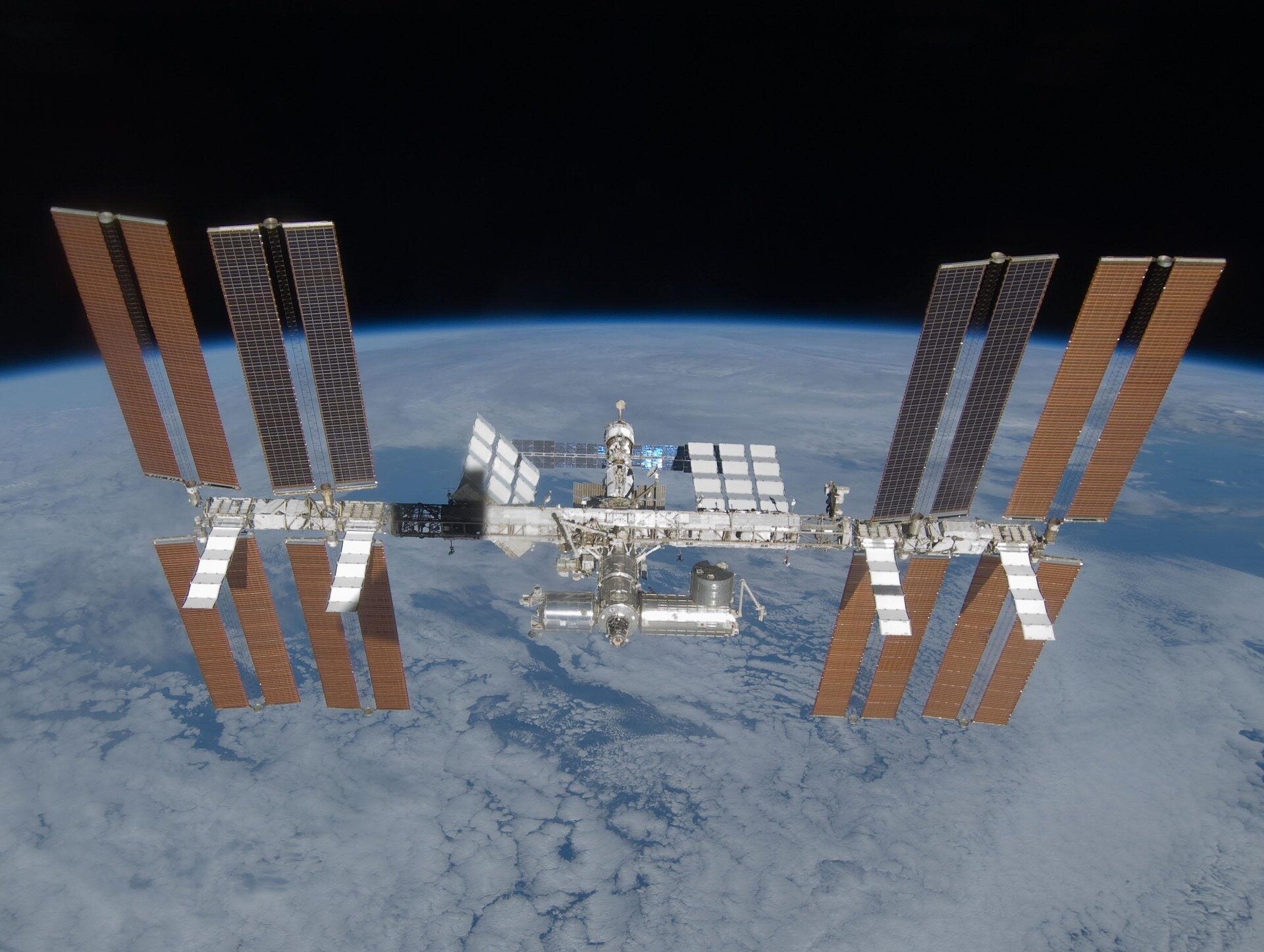
Get ready for a shocking discovery – dust collected from air filtration systems on the International Space Station (ISS) contains higher levels of potentially harmful chemical compounds than the dust found in many American homes. This groundbreaking study reveals that the concentrations of these compounds in the ISS dust exceed the median values found in US and Western European homes.
In a first-of-its-kind study, scientists analyzed dust samples from air filters within the ISS and made a startling discovery. The levels of organic contaminants found in the “space dust” were higher than the median values found in homes across the US and Western Europe. This research, published in Environmental Science & Technology Letters, was conducted by researchers from the University of Birmingham, UK, and the NASA Glenn Research Center, US. They believe that their findings could have significant implications for the design and construction of future spacecraft.
The contaminants found in the ISS dust included polybrominated diphenyl ethers (PBDEs), hexabromocyclododecane (HBCDD), “novel” brominated flame retardants (BFRs), organophosphate esters (OPEs), polycyclic aromatic hydrocarbons (PAH), perfluoroalkyl substances (PFAS), and polychlorinated biphenyls (PCBs).
These compounds, such as BFRs and OPEs, are commonly used in various consumer and commercial applications to meet fire safety regulations. They can be found in electrical and electronic equipment, building insulation, furniture fabrics, and foams. PAH is present in hydrocarbon fuels and emitted from combustion processes, while PCBs were used in building and window sealants, as well as in electrical equipment. PFAS have been used in stain-proofing agents for fabrics and clothing. However, due to their potential health effects, some of these compounds have been banned or restricted in use.
It’s important to note that some of these compounds, including PCBs, certain PFAS, HBCDD, and certain formulations of PBDEs, are classified as persistent organic pollutants (POPs) under the UNEP Stockholm Convention. Additionally, some PAH are classified as human carcinogens, and certain OPEs are being considered for restriction by the European Chemicals Agency.
Co-author Professor Stuart Harrad from the University of Birmingham emphasizes the implications of their findings for future space stations and habitats. He suggests that careful material choices during the design and construction stages could help exclude many contaminant sources. While the concentrations of organic contaminants in the ISS dust exceeded those found in homes and indoor environments, the levels of these compounds were generally within the range found on Earth.
The researchers speculate that the presence of PBDE concentrations in the dust sample, falling within the range detected in US house dust, may be due to the use of inorganic flame retardants on the ISS. They believe that commercially available items brought on board for personal use, such as cameras, MP3 players, tablet computers, medical devices, and clothing, could be potential sources of these chemicals.
The air inside the ISS undergoes constant recirculation, with eight to ten changes per hour. While carbon dioxide and gaseous trace contaminants are removed, it is unknown to what extent this process eliminates chemicals like BFRs. The high levels of ionizing radiation in space can accelerate the aging of materials, including the breakdown of plastic goods into micro and nanoplastics that become airborne in the microgravity environment. This could result in notable differences in the concentrations and relative abundance of various compounds in the ISS dust compared to dust from terrestrial indoor environments.
The scientists measured concentrations of a range of target chemicals in the dust collected from the ISS. In the microgravity environment, particles float around according to ventilation system flow patterns and eventually settle on surfaces and air intakes. The screens covering the ISS HEPA filters accumulate this debris, requiring regular vacuuming to maintain efficient filtration. The material in the ISS vacuum bags consists of previously airborne particles, clothing lint, hair, and other debris commonly known as spacecraft cabin dust. Some vacuum bags were brought back to Earth for further study, and a small sample was sent to the University of Birmingham for analysis in this study.