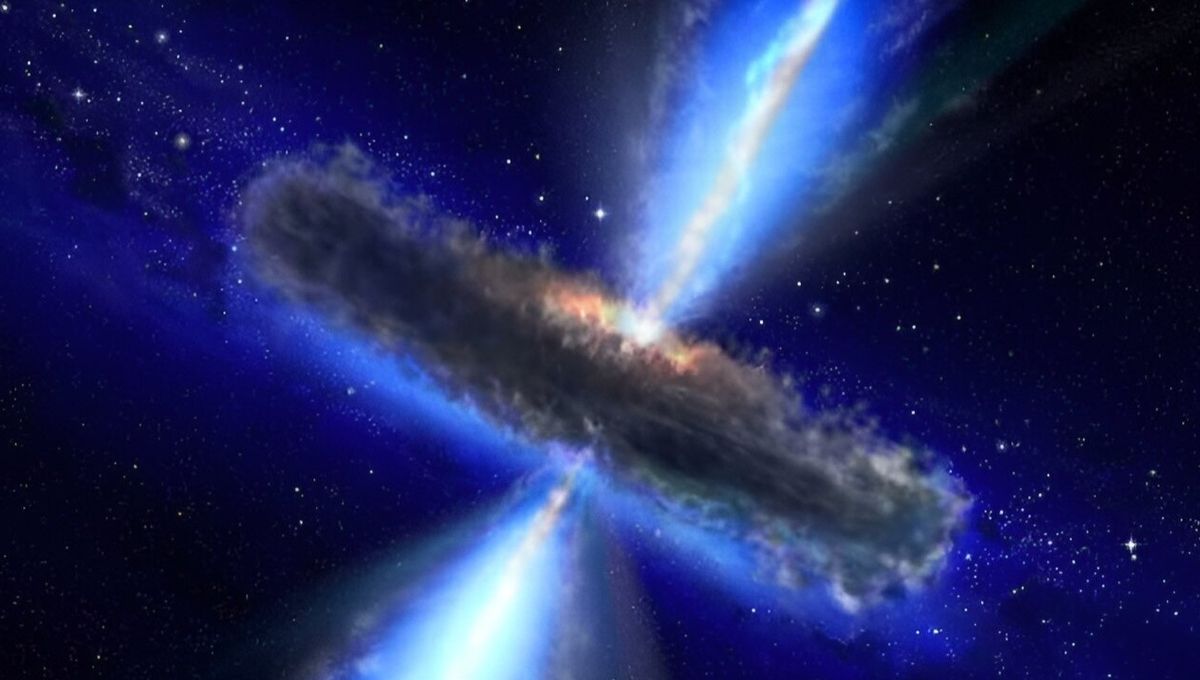
Astronomers have used the powerful JWST telescope to examine the infrared signatures of distant galaxies, revealing some surprising findings. Previous observations with the Spitzer telescope had suggested that JWST would uncover a wealth of active galactic nuclei (AGNs), but the new results indicate a scarcity of rapidly growing supermassive black holes. Lead author Allison Kirkpatrick, from the University of Kansas, expressed her astonishment at the unexpected outcome. The study also highlights the limitations of telescopes, which can introduce biases by only detecting the brightest objects. With JWST now able to observe smaller galaxies, our understanding of black hole growth is evolving. Kirkpatrick emphasized the significance of using JWST to identify much smaller galaxies than ever before, including those the size of our own Milky Way. The team plans to expand their observations to about 5,000 galaxies, which could have implications for our understanding of the Milky Way and its supermassive black hole, Sagittarius A*. Kirkpatrick also raised the intriguing question of whether our own black hole has ever been more active in the past. The study, soon to be published in The Astrophysical Journal, can be accessed on the ArXiv.
Mysterious Absence of Supermassive Black Holes Raises Questions