Physicists have made an exciting breakthrough in understanding the formation of oscillating superconductivity, known as pair-density waves. This discovery sheds new light on the unconventional, high-temperature superconductive state found in certain materials, including high-temperature superconductors.
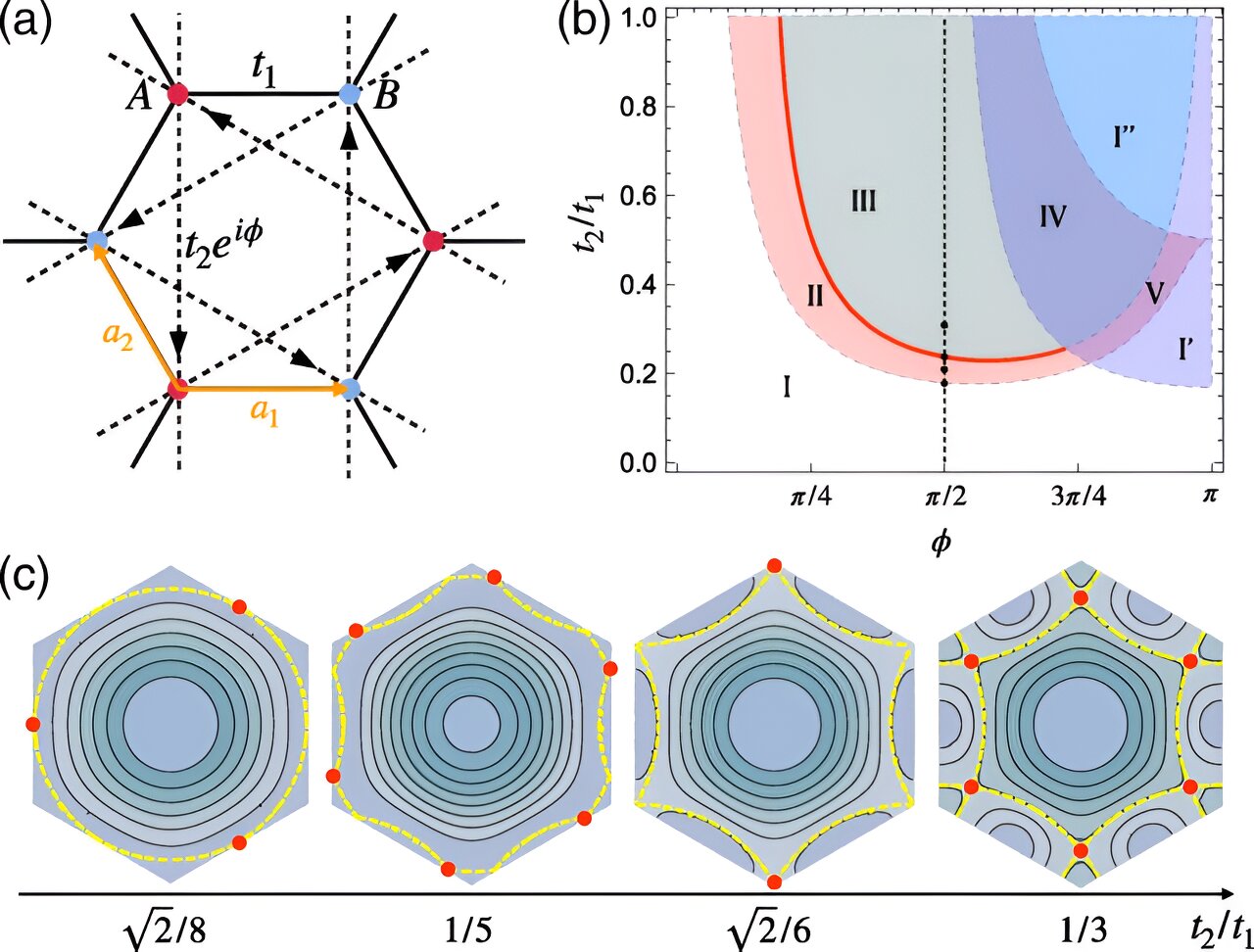
“We’ve discovered that structures called Van Hove singularities can generate modulating, oscillating states of superconductivity,” says Luiz Santos, assistant professor of physics at Emory University and senior author of the study. “Our work provides a new theoretical framework for understanding this behavior, which is not well understood.”
The Mystery of Superconductivity
Santos, a condensed matter physics theorist, specializes in studying the interactions of quantum materials—tiny particles like atoms, photons, and electrons that defy the laws of classical physics.
Superconductivity, the ability of certain materials to conduct electricity without any energy loss at extremely low temperatures, is a fascinating example of quantum behavior. It was first discovered in 1911 when Dutch physicist Heike Kamerlingh Onnes observed that mercury lost its electrical resistance when cooled to 4 Kelvin or -371 degrees Fahrenheit, a temperature similar to that of Uranus, the coldest planet in our solar system.
It took scientists until 1957 to explain the occurrence of superconductivity. At normal temperatures, electrons move independently and dissipate energy when they collide with other particles. However, at low temperatures, electrons can form pairs and enter a new state of matter.
“These pairs bind together to create a collective state that behaves as a single entity,” explains Santos. “Think of them as soldiers in an army. When they march together in lockstep, they become much harder to destabilize. This collective state allows for the robust flow of electric current.”
The Quest for Room-Temperature Superconductivity
Superconductivity holds immense potential. If achieved at room temperature, it could revolutionize the way electricity is transmitted, allowing for more efficient and powerful electrical systems.
“One of the ultimate goals in physics is to achieve practical room-temperature superconductivity, which could have a transformative impact on society,” says Santos. “This breakthrough could reshape civilization as we know it.”
Many physicists and engineers are actively working on this frontier to bring about a paradigm shift in electricity transfer.
In the meantime, superconductivity has already found applications in various fields. Superconducting coils power the electromagnets used in medical diagnostic machines like MRI scanners. Magnetic levitation trains, which utilize superconducting magnets ten times stronger than ordinary electromagnets, are now operational in some parts of the world. These magnets generate a magnetic field capable of levitating and propelling a train by repelling each other when their matching poles face each other.
The Large Hadron Collider, a particle accelerator used to study the fundamental structure of the universe, is another example of technology that relies on superconductivity.
Superconductivity continues to be discovered in more materials, including those that exhibit superconductivity at higher temperatures.
An Unexpected Find
Santos’ research focuses on understanding forms of superconductivity that cannot be explained by the traditional 1957 description. One such phenomenon is oscillating superconductivity, where paired electrons dance in waves, changing their amplitude.
In an unrelated project, Santos asked Castro to investigate the properties of Van Hove singularities, structures where many electronic states become energetically close. Castro’s findings suggested that these singularities could be responsible for seeding oscillating superconductivity.
This discovery prompted Santos and his collaborators to dig deeper, leading them to uncover a mechanism that explains how these dancing-wave states of superconductivity can arise from Van Hove singularities.
“As theoretical physicists, our goal is to predict and classify behaviors to gain a deeper understanding of how nature works,” says Santos. “This knowledge opens up new possibilities for technological advancements.”
Some high-temperature superconductors, which operate at temperatures about three times colder than a household freezer, exhibit this dancing-wave behavior. The discovery of how Van Hove singularities contribute to this behavior provides a foundation for experimentalists to explore the potential applications it presents.
“When Kamerlingh Onnes discovered superconductivity, I doubt he was thinking about levitation or particle accelerators,” Santos reflects. “But every bit of knowledge we gain about the world has the potential for practical applications.”