As we continue to explore the vastness of outer space, we rely on groundbreaking advancements in technology across various fields. One crucial area of focus is materials science, particularly in the aerospace industry. The challenge lies in finding materials that are both lightweight and mechanically strong, a combination that is not easily achieved. Thankfully, metal matrix composites have made significant progress since their inception in the twentieth century, and experts believe they hold the key to future space applications.
One of the most promising types of metal matrix composites is aluminum matrix composites (AMCs) reinforced with high-entropy alloy particles (HEAps). These composites offer superior mechanical properties, including high strength, durability, and plasticity. However, they also come with structural defects such as microcracks and microvoids, which can pose challenges.
Addressing this issue, Professor Hai-liang Yu and his research team from Central South University, China, are exploring a new method to manufacture high-performance HEAp/AMC flat sheets.
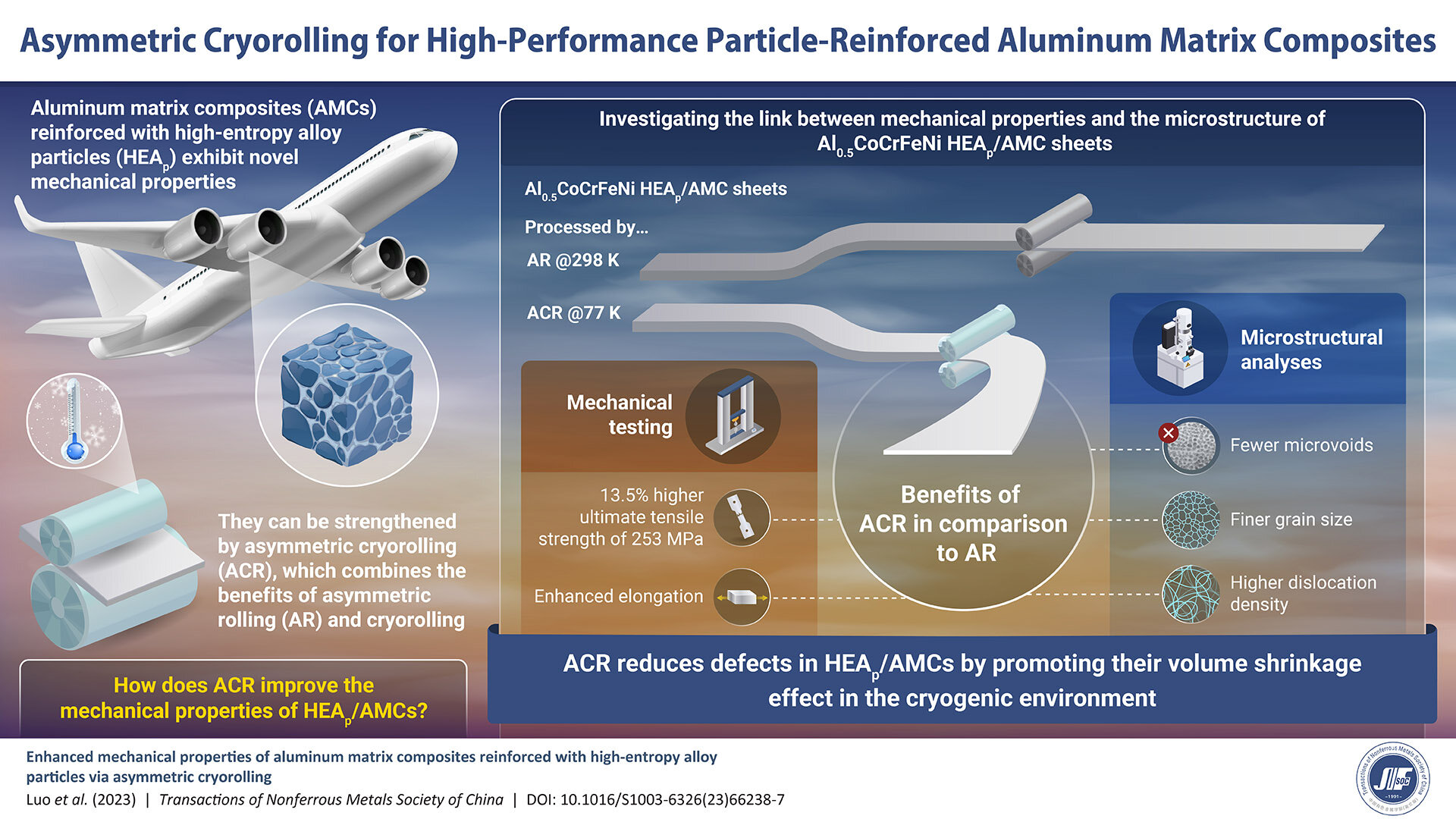
In their latest study published in Transactions of Nonferrous Metals Society of China, the team delves into a promising technique called asymmetric cryorolling (ACR), which combines the advantages of cryorolling and asymmetric rolling (AR).
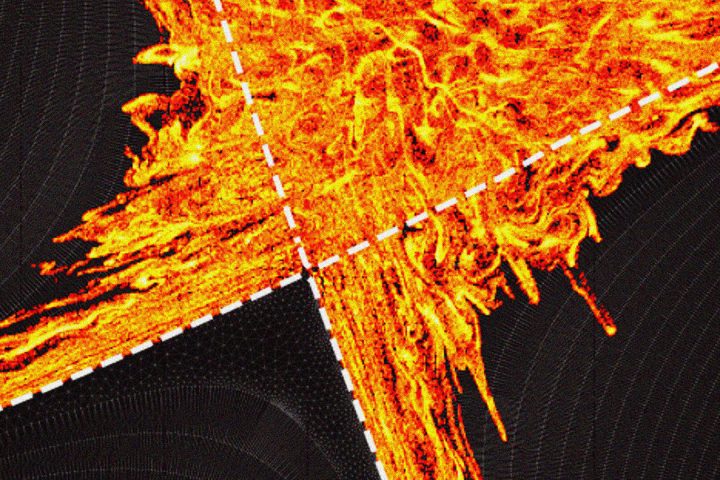
AR is a well-established technique in steel manufacturing that involves passing a metal plate through a rolling mill. This process applies a large shear strain uniformly through the thickness of the plate, reducing the number of defects. The only difference between AR and ACR is the operating temperature. While AR is carried out at room temperature, ACR is conducted at cryogenic temperatures achieved using liquid nitrogen.
Previous studies have shown that ACR can enhance the mechanical properties of HEAp/AMC sheets. However, the strengthening mechanism and the relationship between mechanical properties and microstructure during ACR remain unclear. To bridge this knowledge gap, the researchers prepared HEAp/AMC sheets using AR at 298 K and ACR at 77 K. They then analyzed the sheets using scanning and transmission electron microscopy techniques, along with tensile and hardness tests.
Their analysis revealed significant microstructural differences between the sheets prepared via AR and ACR. Cryogenic processing resulted in sheets with fewer microvoids, a finer grain size, and a higher density of dislocations. Furthermore, the mechanical tests showed that ACR sheets were significantly more ductile and stronger than AR sheets. Professor Yu highlights, “The ultimate tensile strength of 3 wt% HEAp/AMCs prepared via ACR reached 253 MPa, 13.5% higher than that achieved by sheets prepared via AR.”
The researchers concluded that the observed differences between ACR and AR were primarily due to the volume shrinkage effect of HEAp/AMCs. “The larger the volume shrinkage effect of the aluminum alloy, the more tightly the aluminum will wrap around the reinforcing HEAps. This strengthens the bonding between the matrix and the particles,” explains Professor Yu. “Since the volume shrinkage effect is larger in cryogenic environments, ACR plays a significant role in preventing defects caused by the large plastic deformation of HEAp/AMC sheets.”
Overall, these findings suggest that ACR could play a pivotal role in developing new alloys for the aerospace and automotive industries. It may even become the go-to technology for high-performance materials in the future.